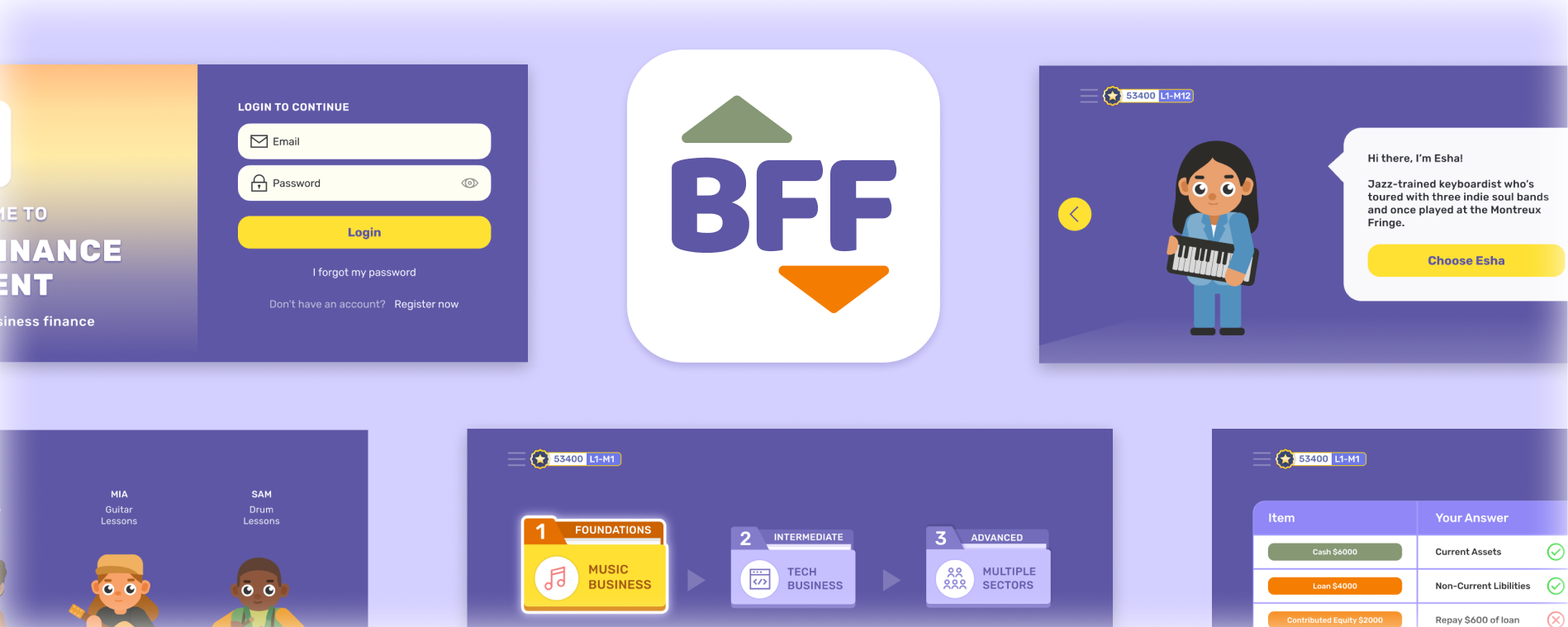
An earlier basic build had the finance exercises, but not the clear progression, game elements, or character-led motivation of the current design. I shaped a narrative-led experience in which learners build an accountancy practice and see their progress take shape. Alongside the game, an educator portal supports course management and helps teachers understand where learners need support.
ROLE
Product & UX Designer
TEAM
School of Coding & AI
CLIENT
Wealthvox × Aston University
STATUS
Launched · In use at Aston University
01 / CONTEXT & OWNERSHIP
The problem behind the product.
The early experience let learners complete finance tasks without a clear reason to return. The redesign adds visible progression, game mechanics, inclusive characters, and feedback intended to make practice more motivating. The brief covered the full journey, character system, screens, and development handoff.
What I owned
I audited the existing experience, defined the gamification architecture, designed screens and the mascot system, created and animated characters, and produced a screen-by-screen design document. My animation background shaped how progression and personality could support the learning experience.
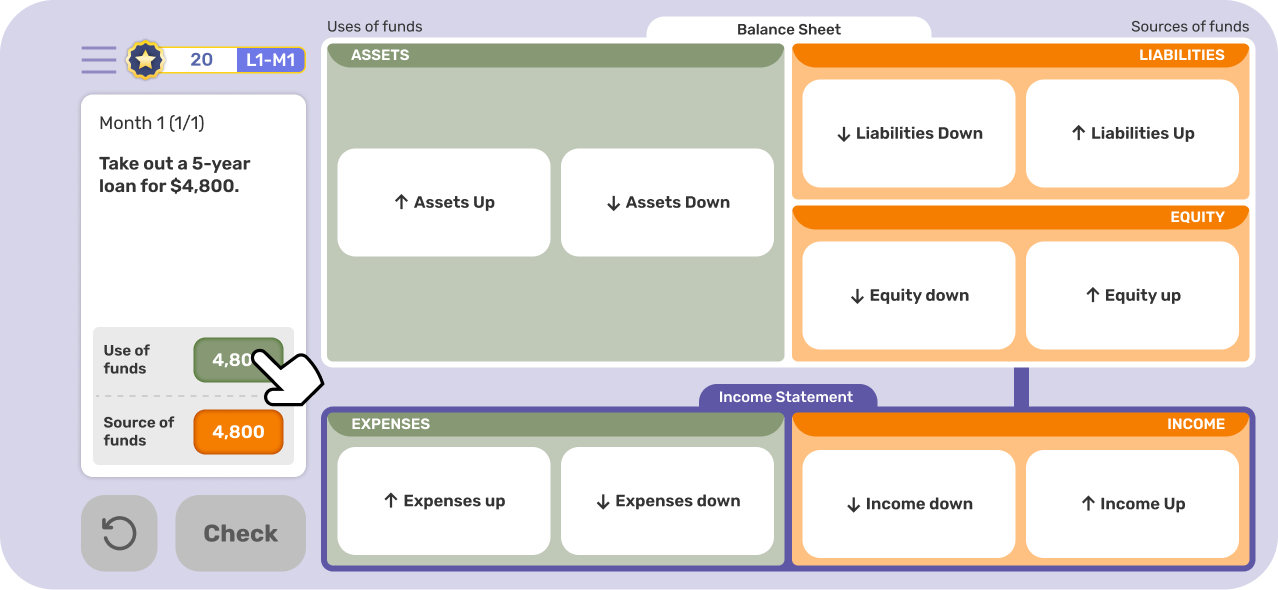
A gameplay walkthrough shows learners applying transactions to the accounting equation and reviewing feedback. Play to explore the interaction.02 / THE DECISIONS THAT SHAPED IT
The thinking behind the screens.
01
Make the story the structure.
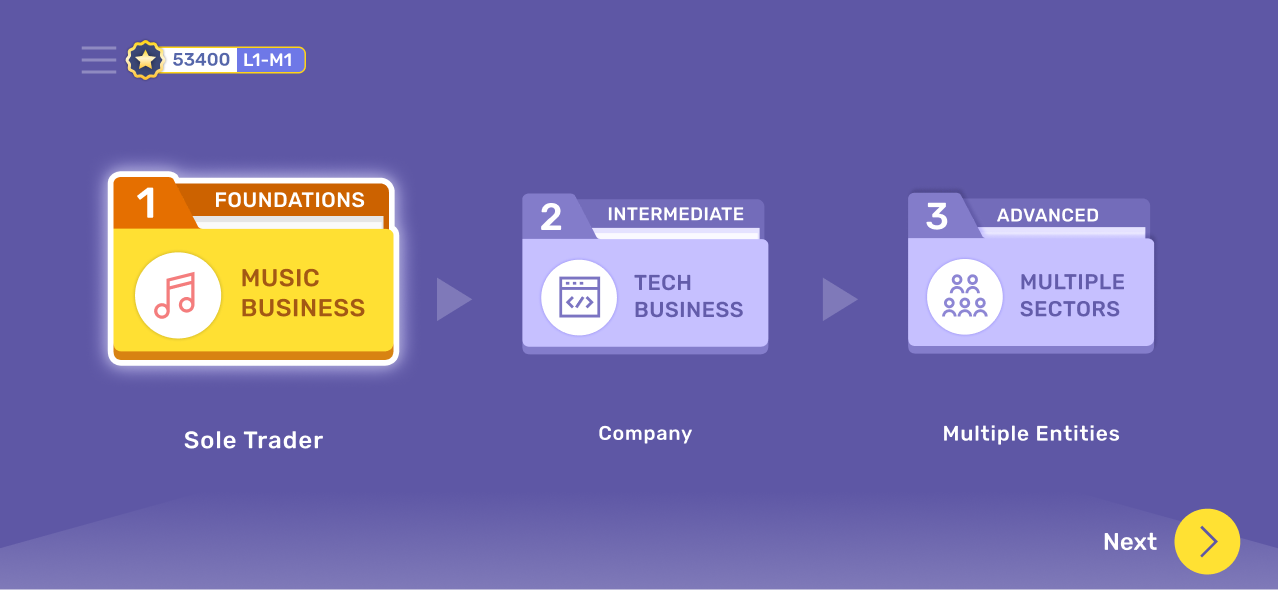
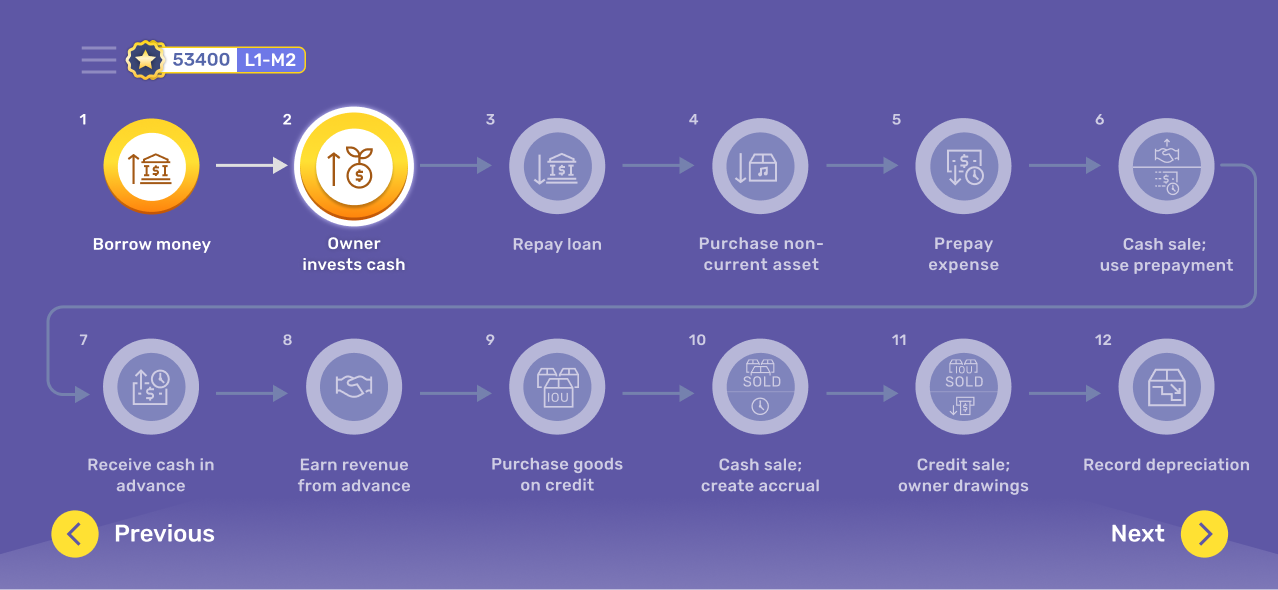
The player is building an accountancy practice. I used that narrative to connect XP, the journey map, a linear unlock system, and rewards across the learning arc.
The learning content stays central; the surrounding structure gives it continuity.
02
Show what is next without making the lock the focus.
The current month is open and clearly signposted. Future months remain visible but visually quieter.
Progression can create anticipation while keeping the next available action clear.
03
Let the mascot grow with the learner.
The implemented mascot system grows from an acorn to a sprout and then an oak, mirroring the learner’s development across levels. Correct and incorrect answer animations give the companion a role in moment-to-moment feedback as well as long-term progression.
The mascot connects the product’s visual identity to its growth story.
04
Make the impact of a transaction visible.
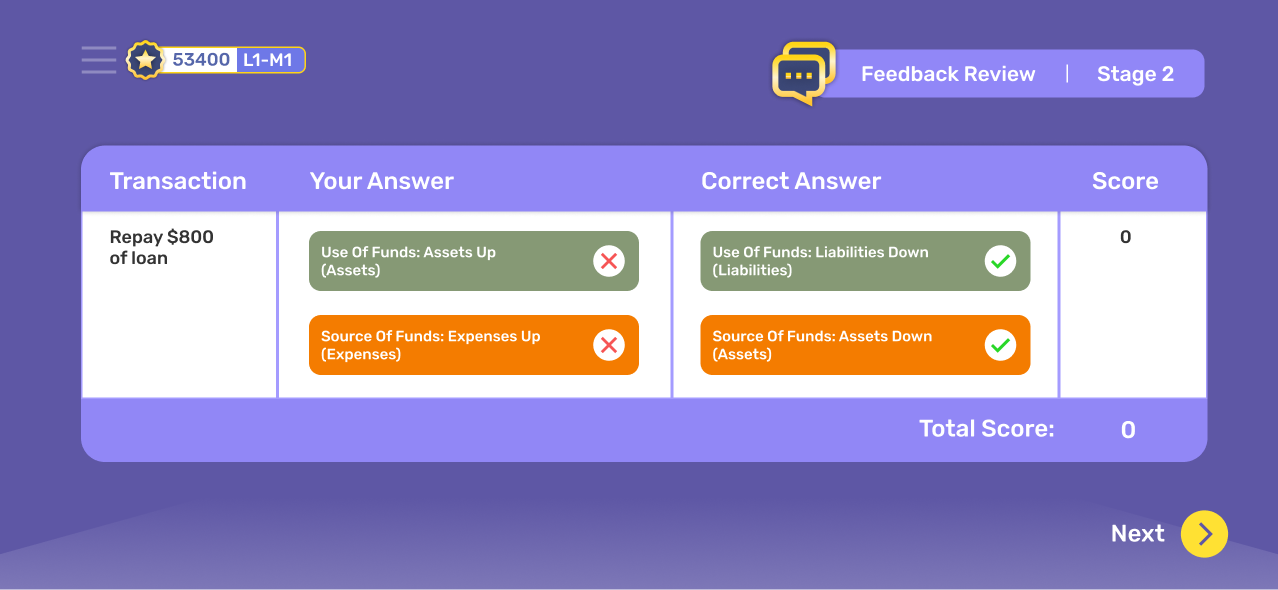
The Colour Accounting approach gives assets, liabilities, equity, income, and expenses a consistent place on screen. Learners work through a business transaction by choosing where its effects belong, then check their answer.
The accounting equation becomes something to interact with, rather than a formula to memorise.
Layout, colour, and labelled up/down choices show how a transaction changes the accounts.IMPLEMENTED MASCOT SYSTEM
Growth, with a personality.
The companion develops alongside the learner. Each stage responds to correct and incorrect answers with its own animation, connecting immediate feedback to the wider growth journey.
LEVEL 1Acorn
Correct answer
Incorrect answer
LEVEL 2Sprout
Correct answer
Incorrect answer
LEVEL 3Oak
Correct answer
Incorrect answer
The three-level path makes the long-term learning journey visible while keeping the first level active.The current month stands out; future challenges remain visible without competing for attention.CHARACTER SYSTEM
A cast that expands with the game.
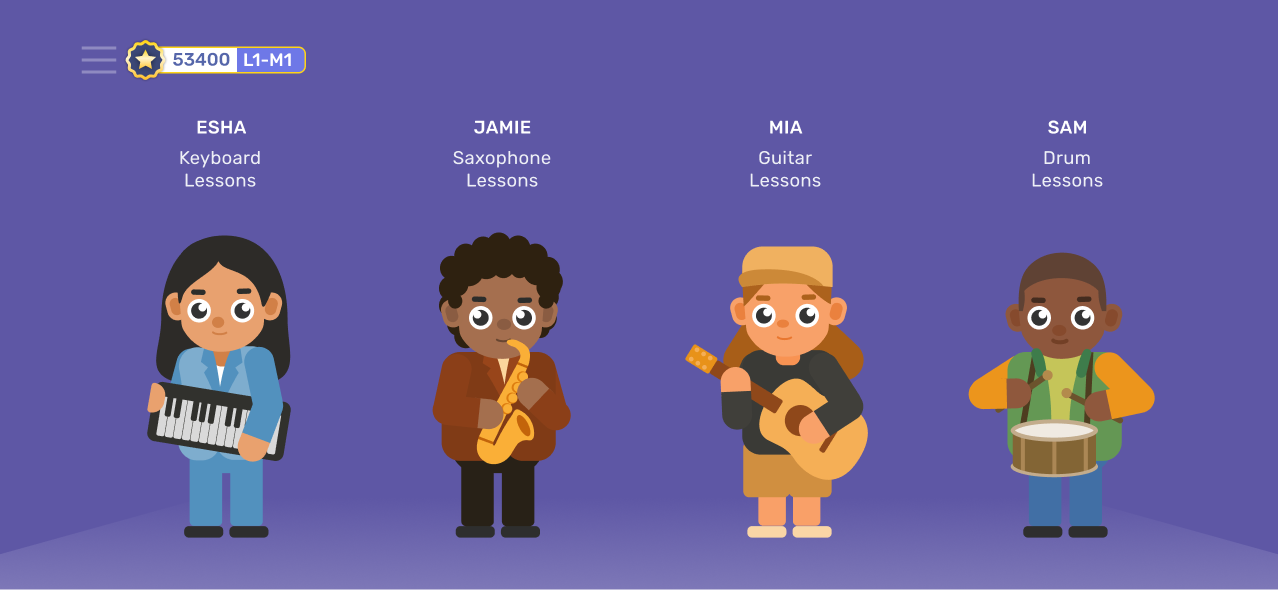
Beyond Level 1’s four musicians, I designed four tech-company CEOs for Level 2 and twelve sector clients for Level 3. The later levels remain in development.
EshaKeyboard
JamieSaxophone
MiaGuitar
SamDrums
Four animated musicians bring a personal entry to Level 1: Esha (keyboard), Jamie (saxophone), Mia (guitar), and Sam (drums).
EthanHealthTech
KenjiGaming
NoraFinTech
SofiaGreenTech
Four animated tech-company CEOs designed for Level 2: Ethan, Kenji, Nora, and Sofia.
Budget airline
Butterfly charity
Coffee chain
Construction
Electric vehicle
Football
Insurance
Luxury hotel
Online fashion
Pharmaceutical
Software developer
Solicitors
01 / 03
Twelve sector clients designed for Level 3, with individual character animations.
Practice feedback shows the learner what they chose, what was correct, and where to improve.REWARDS & ACHIEVEMENTS
Make practice leave a visible mark.
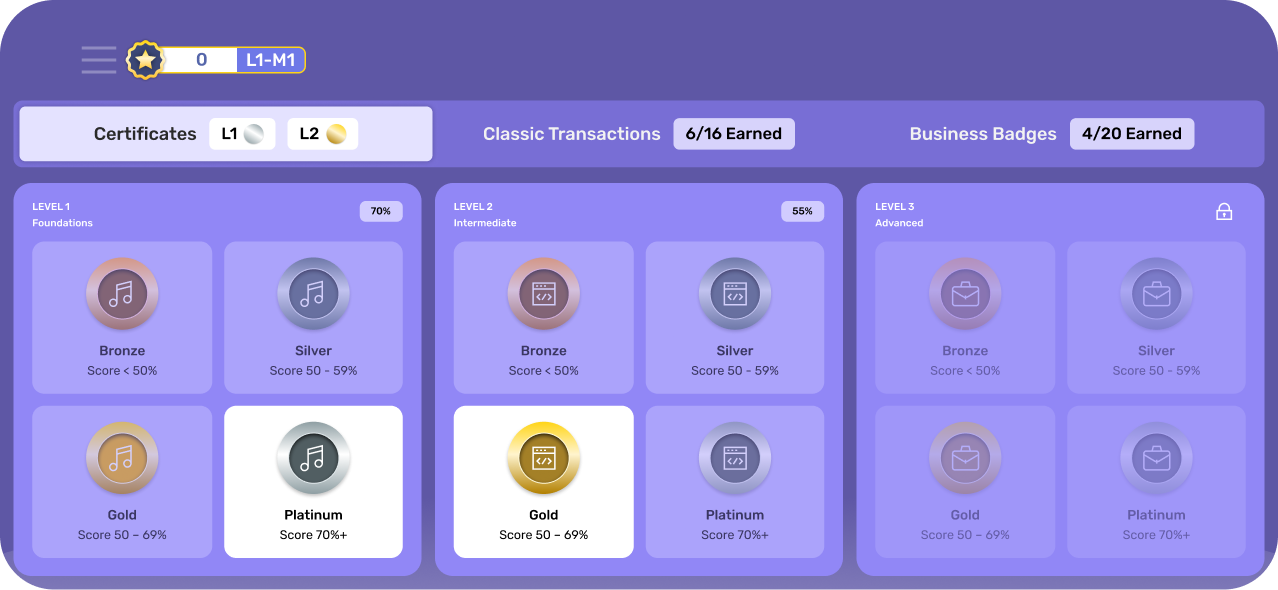
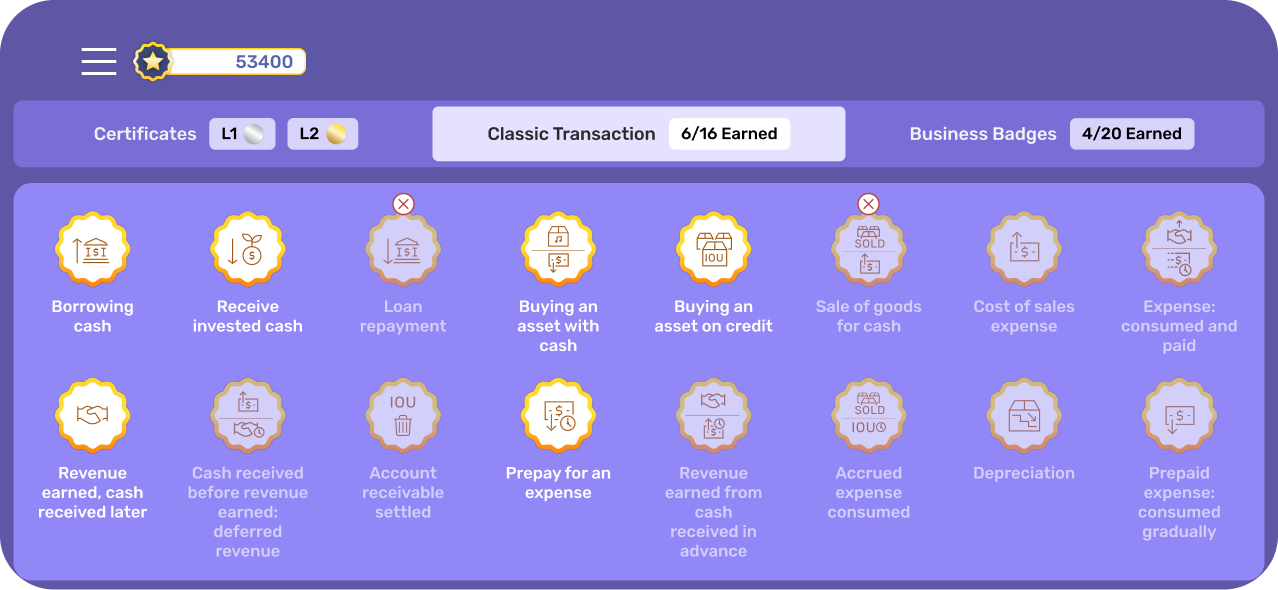
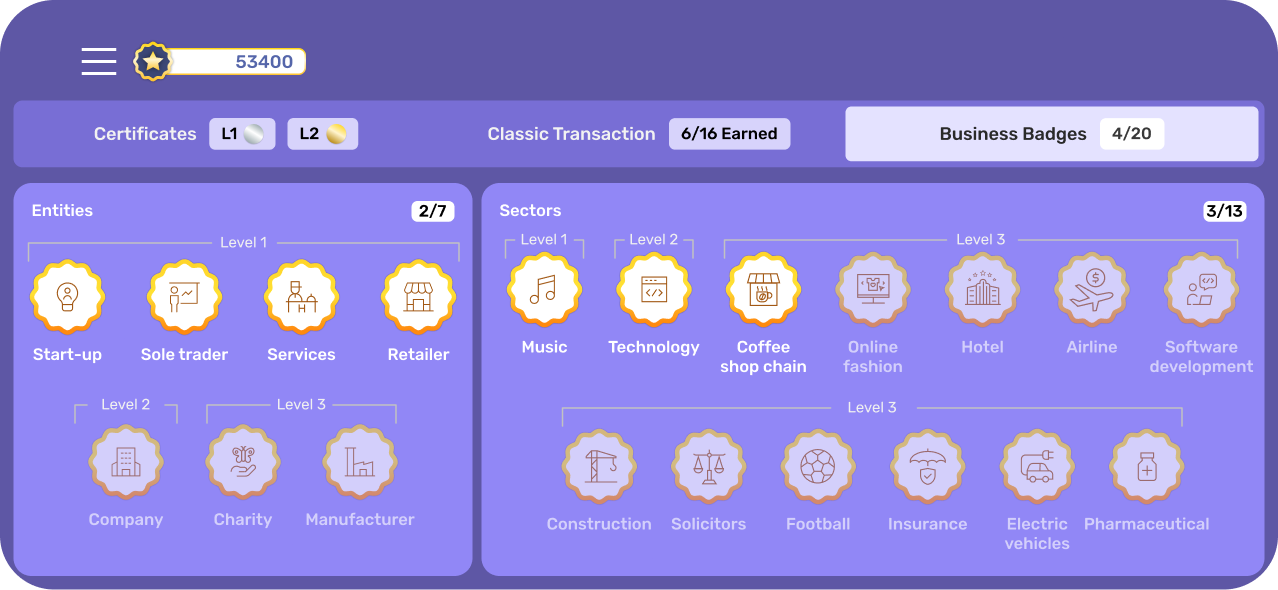
Certificates show performance across levels. Transaction badges recognise individual accounting scenarios, while business badges connect achievements to the entities and sectors encountered along the journey. Earned and unearned states keep progress visible.
Performance is reflected in certificate tiers, with future levels shown in a quieter locked state.
Transaction badges connect achievements to specific practice scenarios.
Business badges make the breadth of the learner’s experience visible across entities and sectors.
03 / EDUCATOR PORTAL
Turning gameplay into teaching insight.
The learner experience is one side of BFF. The companion admin portal gives teachers a way to manage course groups, review participation, and understand performance across the game’s learning stages. I built an interactive prototype in Google AI Studio to explore these workflows across tutor, university-admin, and platform-admin roles.
01
Move from class performance to specific learning gaps.
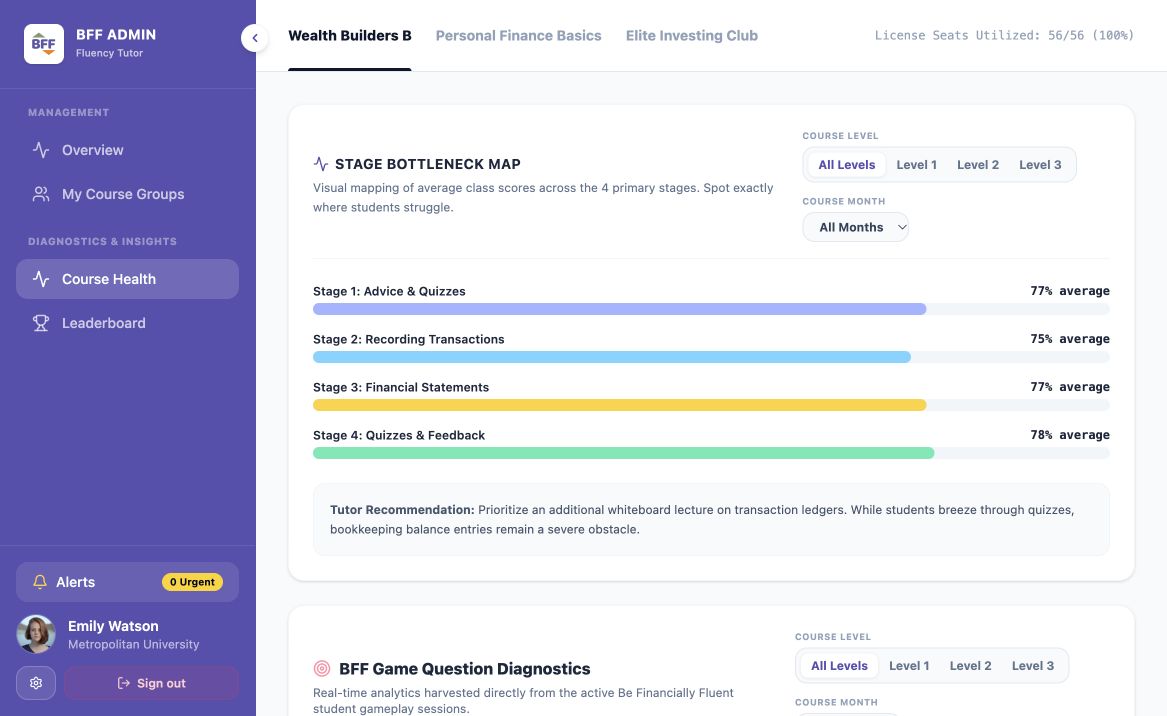
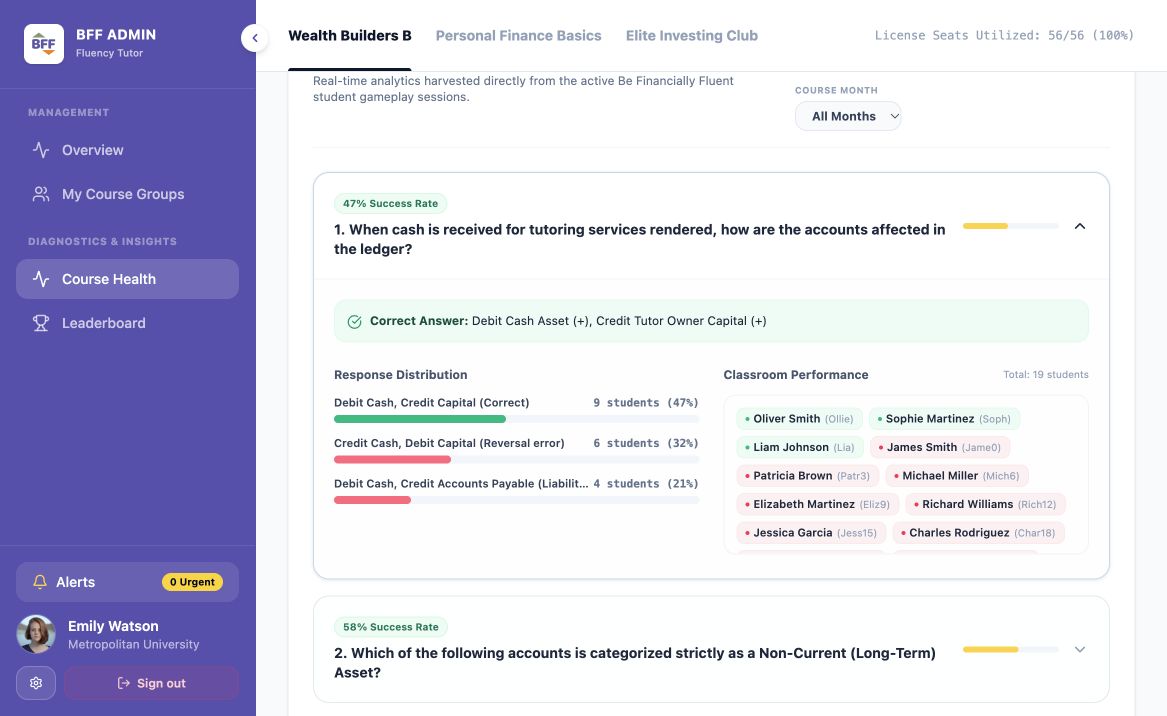
Course Health compares performance across four gameplay stages, with filters for level and month. Teachers can then inspect individual questions, success rates, and answer distributions to understand which mistakes recur.
A class average gives an overview; the question breakdown helps a teacher decide what to revisit.
Course Health brings the game’s learning stages into the teacher’s view. Prototype shown with demo data.Question diagnostics reveal the mistakes behind a score, including reversal and liability errors. Names and scores are demo data.02
Keep participation visible alongside performance.
Course groups combine curriculum skill summaries with a student roster. Filters distinguish students who have logged into the game from those who have not, while the leaderboard brings together XP, current level, month, scores, and achievements.
Teachers can review both how learners are performing and who has started participating.
03
Give each role a focused view.
Tutors work with their course groups and learning diagnostics. University administrators manage tutor onboarding, course setup, and seat allocation. Platform administrators oversee university licenses and capacity.
The same product supports classroom teaching and the administration needed to deliver it.
PLANNED NEXT STEP / LIVE CLASS QUIZZES
A planned extension will let teachers launch a live quiz during a class, with students answering on their phones inside the BFF game. After each session, teachers will be able to review quiz scores and see who performed well. This feature is planned for development and is not included in the current portal prototype.
04 / OUTCOME & LEARNING
Launched for Aston University students.
Be Finance Fluent has launched for Aston University students and is in active use. The mascot system is implemented in the game, connecting learner progression with character growth and animated answer feedback. The experience continues to evolve, with live class quizzes planned as a future extension.
Early feedback from Aston University students and other testers has been positive: they enjoy the game and see it as a more engaging way to practise financial concepts. This is qualitative feedback; retention and learning outcomes have not yet been measured.
The educator portal is presented here as an interactive prototype with demo data. Its screens demonstrate the intended workflows; they do not establish live game-data integration or measured teaching outcomes.
What this work reinforced
Character and motion work best when they explain progress and support the learner. The opportunity is to test whether the narrative helps students return—and whether returning leads to learning.